
July 15, 2026
Sam Hess, Superintendent
The Mill River Club, Oyster Bay, NY
This edition of “Talking Ocean Organics” takes us to The Mill River Club in Oyster Bay, NY. Our article will focus on Sam Hess. Sam has been the superintendent at Mill River since 2023.
We’ll talk about Sam’s personal and professional journey, the property he looks after, and how he has incorporated Ocean Organics products into his agronomic programs.
About Sam
Sam was born in Bloomsburg, PA in 1988. His father Jeff is a mechanical engineer. Jeff was an Air Force mechanic in the late 70’s. Sam’s mom Christina worked as a receptionist in a doctor’s office. Sam has a younger brother Andrew.
“I’ve been in golf as far back as I can remember,” Sam said, “my mom’s parents owned a nine-hole pitch and putt with a driving range. It’s where I made my bones and got interested in golf and golf course maintenance. When I was 15, I got a job at a local public course on the grounds crew, Rolling Pines GC in Berwick, PA. This is where I learned all the basics on maintaining a golf course. The superintendent at Rolling Pines, Greg Bailey, took me under his wing and encouraged me to pursue an education in golf course maintenance. In 2009, I enrolled at Penn State University in the two-year program.”
“My first internship was at Merion Golf Club outside Philadelphia (The East Course is currently ranked #13 in the world) working for Matt Schaffer. It was a great experience. I was 20 years old,” remembered Sam, “there were 50 guys on the grounds crew. It was a totally high end and detail oriented mindset that I was exposed to. Everyone on the crew wanted the golf courses there to be perfect.”
“My second internship was at Los Angeles CC (The North Course is currently ranked #18 in the world) working for Russ Meyers. This was in the middle of a restoration of the North Course by Gil Hanse to George Thomas Jr’s design from 1921. LACC hosted the Walker Cup in 2017 and the US Open in 2023. LACC is a rugged and unique property. It was another great learning experience.”
With his degree in hand and solid internships under his belt, Sam secured his first assistant’s position working for Adam Wilkins at Creek Club in Locust Valley, NY. Designed and built during the golden age of American golf course architecture by famed designers CB Macdonald and Seth Raynor, Creek Club is one of the top clubs in the US. “I worked at Creek Club for five years,” said Sam, “It was another high-end club where members expected tournament conditions every day. Great experience. Next up was Fresh Meadow CC in Lake Success, NY working for Joe Gardner. Fresh Meadow was designed by renowned architect Charles Alison and the club’s history dates back to the 1920’s. Another high-end club where the membership demanded great conditions every day.”
The Mill River Club was Sam’s next stop. “I was hired as the senior assistant working for Steve Sweet. I was promoted to interim superintendent in 2023 and took over the job as superintendent in 2025. My mission has been to give Mill River’s members tournament conditions every day. And Ocean Organics has helped me get there.”
On a personal note, Sam met his wife Megan during his time at Creek Club. They have a daughter Harper-4 and a son Wesley-2.
Effects of Heat Stress on Almonds
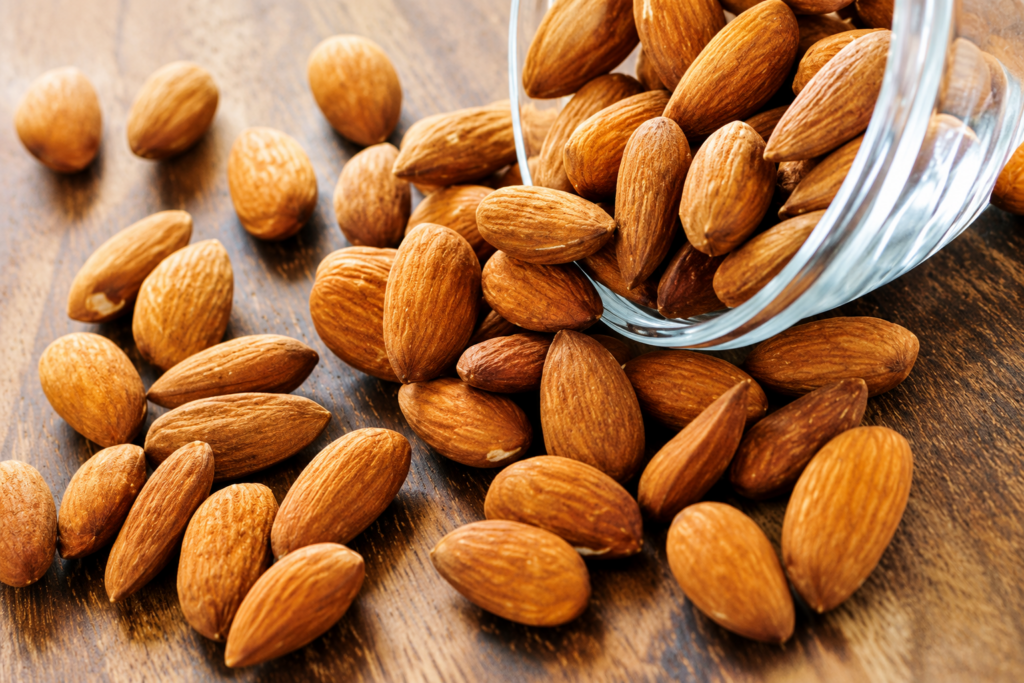
Heat stress has numerous effects on almonds. Each of these effects is important to the quality and quantity of nut yield each season. Each of these effects is also important to maintain nut yield year after year.
The most recognizable heat stress effect is increased water stress resulting from transpiration demand. Water stress results in diminished kernel filling.
Less recognizable but important is the tree’s use of stored carbohydrates instead of photosynthate carbohydrates. This shift in balance toward stored carbohydrates occurs because stomatal closure resulting from heat stress reduces photosynthetic production in the leaves.
Taken together, these two effects result in reduced crop yield weight on a seasonal basis followed by reduced tree carbohydrate reserves year after year.
Effects of Heat Stress on Almonds
Heat stress has numerous effects on almonds. Each of these effects is important to the quality and quantity of nut yield each season. Each of these effects is also important to maintain nut yield year after year.
The most recognizable heat stress effect is increased water stress resulting from transpiration demand. Water stress results in diminished kernel filling.
Less recognizable but important is the tree’s use of stored carbohydrates instead of photosynthate carbohydrates. This shift in balance toward stored carbohydrates occurs because stomatal closure resulting from heat stress reduces photosynthetic production in the leaves.
Taken together, these two effects result in reduced crop yield weight on a seasonal basis followed by reduced tree carbohydrate reserves year after year.
About Mill River
The Mill River Club was founded in 1963. It was the dream of attorney William Roach, a Nebraska born Irish-American and WW2 pilot. Mr. Roach organized a core group of Long Island golfers to join in backing him financially for what promised to be an extraordinary new private golf club with a core commitment to maintaining a non-sectarian membership. The group acquired the “Appledore” estate in Upper Brookville on the North Shore of Long Island. The property was 126 acres and included a 47 room Tudor mansion (today’s clubhouse), a horse stable, a pool, and indoor and outdoor tennis courts.
Gerald C Robey was selected to design the course. Roby spent years working with famed golf course architect William Mitchell. The Appledore estate provided Roby with an ideal plot of land to create a course that provided the members with undulating terrain and dramatic elevation changes with stunning greens complexes. The course opened in 1965. It plays 6595 yards from the back tees. After construction, Roby retired. He looked at his design effort as a gift to his friend William Roach.




Member of the Maine Seaweed Council
Copyright ©2026 Ocean Organics – all rights reserved.
The Ocean Organics wordmark and stylized logo are registered trademarks of Ocean Organics