


June 2026
Alternate bearing crops!
Pistachios are the classic example of an alternate bearing crop. 2026 is an “off” year for California pistachios. 2025 was an “on” year and next year isn’t here yet!
This year’s California crop is expected to harvest less than a billion pounds. Last year’s harvested crop was around 1.5 billion pounds. These 2 years follow the 2024 crop of 1.1 billion pounds and 2023’s crop of 1.5 billion pounds. This is the reality of alternate bearing crops.
Why does alternate bearing happen and how do I farm in an “off” year and encourage a large “on” for the next season? These are the 2 questions that growers face no matter what phase of the cycle they find themselves.
The scientific literature tells us alternate bearing in pistachios is driven by high consumption of carbohydrates in “on” years. (1, 2) This consumption is weighted toward supporting kernel filling and shorts the needs of initiation of next year’s flower buds. A big crop uses up the nutrition which will be required for the following year.
Nutrition 2 years at a time
Heavy nut production in the “on” year can starve flower bud initiation which is meant to produce nuts in the following year. The “on” year requires substantial amounts of nonstructural carbohydrates along with nitrogen and potassium reserves. These 3 nutritional categories are required for fruiting shoot and bud development for the following year.
The critical balance of nutrients between the “on” year and the “off” year is the reason that growers regularly receive the advice “remember that we are always growing two crops” and “do not lose yield for next year because you treated the other nutrients and orchard health like the N and K inputs you may be reducing (sic).” (Rich Kreps, West Coast Nut, May 2026)
Water relations in stage 3
Stage 3 in pistachio nut development is the “kernel growth” phase. This is when the kernel expands, fills the shell, and determines final nut weight. Stage 3 determines the split percentage and nut quality. Stage 3 water stress can be quite costly in terms of yield and quality.
Full irrigation (100% ETc) is required. Heat stress and moisture deficit will take their toll on yield and quality. (3) According to UC Davis irrigation recommendations, stage 3 is where kernel growth and irrigation are the primary focus.
Stage 3 is where the stress resilience properties of Ascophyllum nodosum extracts can have their most dramatic effect. Growers routinely use Ocean Organics’ Ascophyllum nodosum extracts, usually Guarantee Hi K 0-0-6, at this stage.
Nutritional sprays, usually nitrogen and potassium treatments, are used for support during stage 3. Ascophyllum nodosum extracts are tank mixed with them for a “free ride” and maximum economy.
Citations:
1) Khezri et al. 2020, Trees 34, 855-868, Alternate bearing in pistachio (Pistacia vera L.): a review
2) Guney, Mujgan, et al. 2023, Sustainability, Vol 15, #15300
3) Goldhamer, D. (2012). Pistachio Irrigation. UC ANR Pistachio Production Manual, Chapter 12.
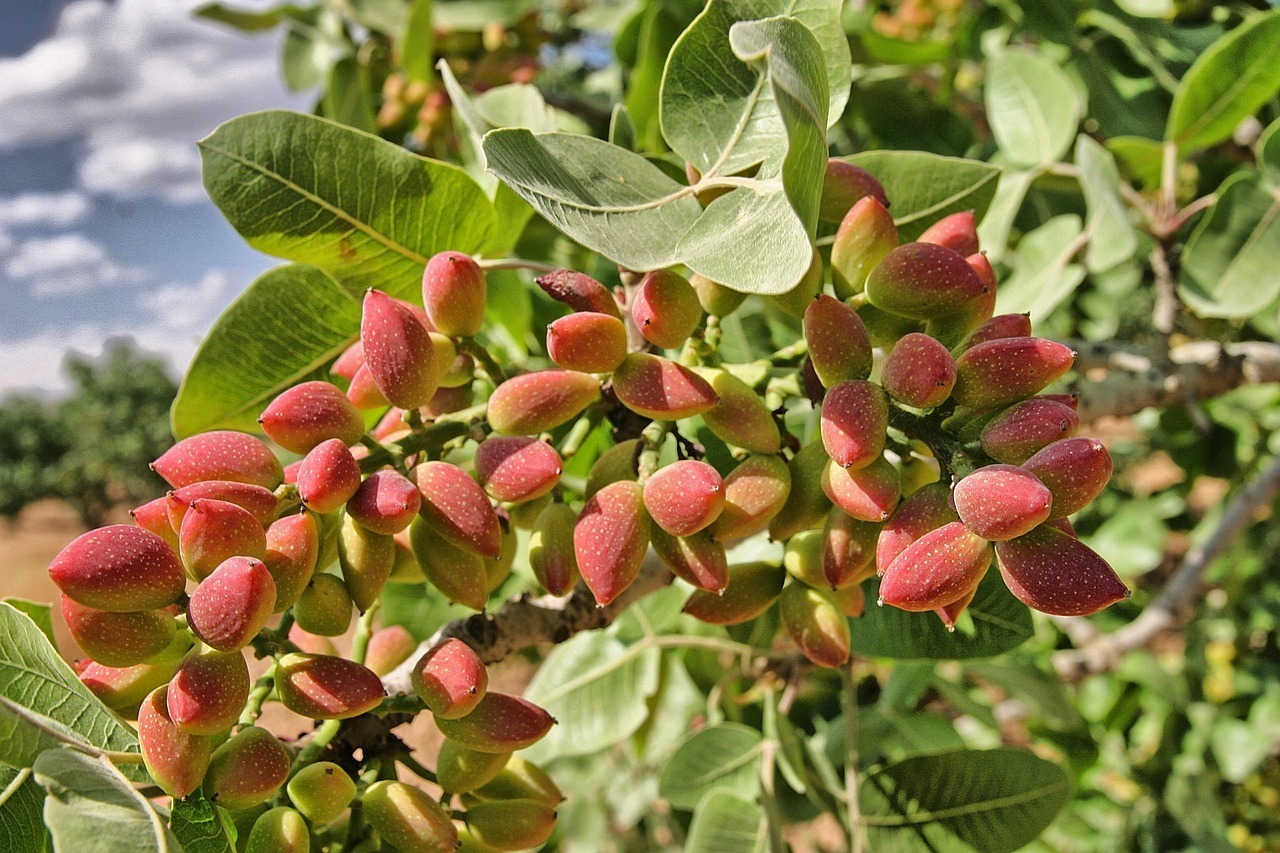
Guarantee Hi K Optimizes Tree Health in On Years and in Off Years
Guarantee Hi K 0-0-6 is OMRI Listed and has proven to be a key component of the pistachio growers’ toolbox. It provides resilience to heat stress and water deficit stress in both the “off” years and the “on” years.
Heat stress resilience is the trees’ ability to combat the negative tree health effects of heat stress. Heat stress resilience protects tree health. Tree health is required to maximize carbohydrate production resulting from photosynthesis. Tree health is required to balance the allocation between newly produced photosynthates and stored carbohydrates in the rapidly filling stage 3 kernels.
Guarantee Hi K 0-0-6 tank-mixes well with nutritional sprays which are often applied during stage 3. In addition, this product’s 6% potassium analysis fits well within the overall nutrition program. Ascophyllum nodosum extract products are an economical key to the “tree health toolbox.” They are your best and lowest cost means to optimize tree health in an “on” or an “off” year!
See Our Complete Line of Plant Health Solutions


Art Dawson, Ph. D.

Greg Cosman, BSc. Agr.


Member of the Maine Seaweed Council
Copyright ©2026 Ocean Organics – all rights reserved.
The Ocean Organics wordmark and stylized logo are registered trademarks of Ocean Organics