


May 2026
May & June are Critical Months for Almonds
It’s Mid-May! The “warm summer months” are just beginning.
Evaporation Transpiration demand will increase daily, and the effects of heat stress will develop in your crops at the same time.
Typical Evaporation (ETc) transpiration demand for Almonds will range from 20 to 22 inches of water from May 15th to July 15th. Around Fresno, CA that period represents the peak 60-day demand window of the entire season.
ETc transpiration demand is driven by atmospheric heat, low relative humidity and exacerbated by long day length.
In the month of May daytime high temperatures around Fresno historically range from 90 F to 95 F. June is the “transition month” to summer heat with typical daytime high from 90 F-95 F with spikes to 100 F. July highs are commonly 97 F-102 F.
Relative humidity is at its lowest point around 4 pm each day when the temperature is at its highest. At its lowest point, relative humidity is frequently around 21%.
Day-length gets longer each day until it reaches the longest day of the year. The longest day is known as the Summer Solstice and occurs every June 21st.
Why does this matter?
Almonds grow to their maximum size and weight in May and June. These months are critical for maximizing crop yield. These are the months when almonds kernels get filled and when expanding kernels are most vulnerable to heat stress.
Our job is to encourage the kernels to grow to their maximum size and weight. We do this by managing heat stress through the tools we have available: skillful irrigation practices, effective nutrition programs and effective use of bio stimulants.
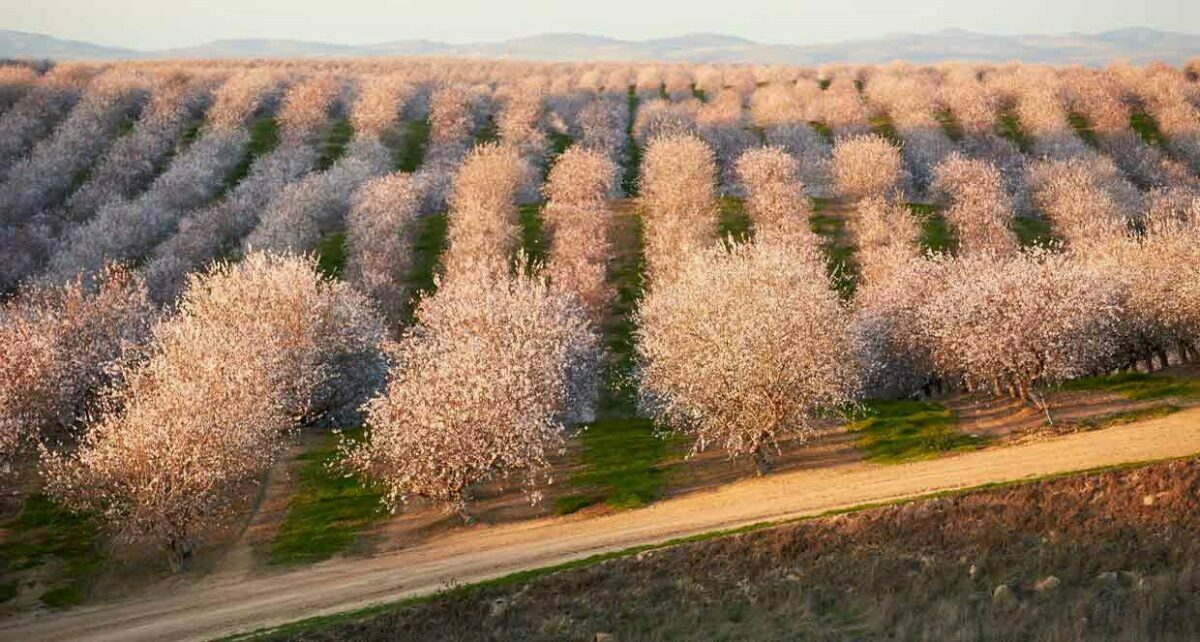
Effects of Heat Stress on Almonds
Heat stress has numerous effects on almonds. Each of these effects is important to the quality and quantity of nut yield each season. Each of these effects is also important to maintain nut yield year after year.
The most recognizable heat stress effect is increased water stress resulting from transpiration demand. Water stress results in diminished kernel filling.
Less recognizable but important is the tree’s use of stored carbohydrates instead of photosynthate carbohydrates. This shift in balance toward stored carbohydrates occurs because stomatal closure resulting from heat stress reduces photosynthetic production in the leaves.
Taken together, these two effects result in reduced crop yield weight on a seasonal basis followed by reduced tree carbohydrate reserves year after year.

Guarantee Hi K Provides Increased Tolerance to Stress
Guarantee Hi K 0-0-6 has proven itself to be a key component of the maximum growth toolbox. This product has repeatedly demonstrated over 10% yield increase compared to other seaweed products included in nutrition programs.
Guarantee Hi K 0-0-6 is OMRI Listed and impacts almond yields in the manner of a natural bio-stimulant. It influences the major plant growth processes when it is used in a timely manner. In the May to July period, it is effective in conferring heat stress resilience to almond trees.
Heat stress resilience is the trees’ ability to combat the negative effects of heat stress. Heat stress is the result of high summertime temperatures which produce high transpiration (ETc) demand. These effects occur during the longest days of the year.
Heat stress resilience protects the health of the tree and protects the complete filling of almond kernels. Heat stress resilience protects almond yields.
See Our Complete Line of Plant Health Solutions


Art Dawson, Ph. D.

Greg Cosman, BSc. Agr.


Copyright ©2026 Ocean Organics – all rights reserved.
The Ocean Organics wordmark and stylized logo are registered trademarks of Ocean Organics